
It s a shame I've been sitting on this book for about two years now. A friend of mine gave me Never Eat Alone , by Keith Ferrazzi a couple years ago (thanks Rey), and it s been on my bookcase ever since. It was resting there not because I didn't want to read it, but because I already had so many others in the pipeline. I finally got around to reading it last month and I definitely recommend it. In very simple terms, Ferrazzi explains why networking is important and how to do it. From how to make call lists to planning dinners to personal branding to goal setting, it s all here. He also maintains a valuable blog .
Inevitably there will be times when you have setbacks or things don t go your way. Maybe you didn't get a job you thought you were sure to get. Maybe you lost a job unexpectedly, didn't win a contract, or lost a major client. Your car always seems to break down right after you've had some other unexpected expense. These kinds of situations immediately place us in crisis. They don t feel good, but sometimes they re what we need in order to grow. The beautiful thing about crises is that they force us to take a step back and reevaluate what s going on in our lives and rediscover what we truly want and need. When we get over that initial shock and feeling of disappointment, we might realize that maybe that job wasn't really the best for us anyway. Maybe, just maybe, that wasn't what you really wanted to spend your life doing. Maybe that friend was holding you back instead of pushing you forward. The way I deal with crises of these sorts is simple: If something doesn't go my way professionally, I try to create a situation that would be more rewarding than the situation originally planned. A while ago, I was offered a job that looked very promising. After I accepted the offer, they pushed the start date back three times, later informing me (via e-mail) that they wanted to bring me on in the near future but I should feel free to explore other options. I was extremely disappointed. I felt disrespected and angry, but decided to make the best of the situation and follow my dream of working internationally. I then flew to Santiago, Chile and had great professional and personal experiences I wouldn't have had otherwise. Later, reflecting back on the original opportunity, I realized that working for a company that avoids a start date three times and then can t pick up the phone to explain the situation is probably not where I need to spend my time. Use setbacks as an opportunity to put your goals in order and act on them. In the moment, it s difficult to look at a setback as temporary, but they are. They happen to everybody. It s how you respond to them that will determine how they affect you.
About two months ago I wrote this note on Facebook entitled You Changed My LIfe. I was sitting at my desk working on something when a spark of reflection and inspiration forced me to close the laptop and pick up the pen. At first, I wrote aimlessly. But as the words flowed, I a caught a brief glimpse into my soul that I rarely allow myself to see. I didn’t know it at the time, but that note would later serve as the foundation for the essay I would write to gain entrance into MBA in Sustainability program at Bainbridge Graduate Institute. The text from both pieces follow below…
You Changed My Life
When I entered college, I knew I was a businessman. So…I studied business. I had to take a POK (perspectives on knowledge), or something like that…so I took “Social Problems and Processes” by Dr Maria Lowe. That class opened my eyes to the world around me. It changed my life. I was fortunate enough to be changed for the better by the likes of Dr. Lowe, Dr. Sandi Nenga, Dr. Don Parks, the maintenance people, Ms. Ella, etc.
Then came Mexico, Honduras, Spain, Italy…Chile, Argentia y más and the people that touched my life along the way.
Over these years, I’ve discovered that I’m not a business man, but a man who understands business. I also understand that business is an pervasive institution that influences our lives in ways we couldn’t image. How do we engage this institution to ensure those influences are beneficial? How do you define and codify beneficial? I don’t know, but these are challenges I’m willing to accept.
What is social entrepreneurship? It’s what business has the potential to be. It’s what happens when you allow your level of social consciousness to be heightened. It’s what happens when you open your heart as well as your mind. It’s what happens when you think “stakeholder” en mes de “shareholder.”
To those who have helped me realize that…thank you.
Admissions Essay for Bainbridge Graduate Institute
Business is quite possibly one of the most pervasive institutions on earth. Before formal education existed, merchants traded goods and services in order to allocate scarce resources. Business affects every aspect of our lives from the clothes we wear and what products we buy to where we decide to live and send our children to school. It helps shape the individual decisions we make, the lives we lead, and entire societies. Considering the tremendous role business plays in our lives and its far-reaching effects, it is paramount that we take a critical approach to the management of such an institution to ensure we practice it in a way that preserves and promotes the well-being of our people and environment.
When I entered my undergraduate studies at Southwestern University, I knew I wanted to be a businessperson. I showed up on my first day with my eyes set on a business degree. The plan was to major in business, obtain a business degree, find a well-paying job at a big company, save money, and eventually retire. In other words, I was hoping to live the American Dream. However, things didn’t go according to plans. Things changed, but they changed for the better. Over the four years I attended Southwestern I learned several lessons and was involved in many activities and organizations. Inside the classroom, I received quality instruction from quality professors and built valuable rapport with my fellow students. Outside the classroom, I built relationships with the grounds people, the maintenance folks, and the cafeteria workers. SU is a very affluent school and I often had more in common with the staff than the faculty and students. In 2007, I crossed the stage with a solid undergraduate foundation and the influence of two professors who changed my life and significantly helped shape me into the person I am today: Dr. Don Parks and Dr. Maria Lowe.
Dr. Don Parks was my first business professor. He is unassuming with many years of experience in military tactics, business theory, and organizational strategy, and has a real passion for social justice. After serving several years in the United States Air Force, he had a long career consulting major companies in organization theory, leadership, and supply chain management. While his business acumen is top-notch, where he differentiated himself from other professors was the value he placed in people and ethics. He taught us about alternative companies such as Ben & Jerry’s Homemade Ice Cream, Inc., and assigned Ben and Jerry’s: The Inside Scoop (Fred “Chico” Lager. 1995) as required reading in addition to Michael Porter and Peter Drucker. Parks taught us there is more to business than income statements and balance sheets. While important, they are not the only indicators of success and failure. He taught us that our actions in business have impacts beyond what we normally measure in spreadsheets, and how those impacts trickle out into other areas of our lives.
Being the liberal arts school it is, SU required we take a certain number of classes outside of our major course of study called Perspectives On Knowledge (POKs). These classes were intended to broaden our overall understanding of the world around us. The first class I took to fulfill the POK requirement was Social Patterns and Processes, taught by Dr. Maria Lowe. I chose this class because I thought it would help me better identify different communities and understand the social motivations driving their behavior when developing business strategies. I did not expect that class to change my life, but change my life it did. Actually, I dare say, that class saved my life. Dr. Lowe pushed me so far outside of my comfort zone I consistently left the classroom feeling confused, angry, and defeated. I kept showing up. She challenged me to not see things only as they are, but as they could be. Why does our society spend more time commuting to work than rearing our children? How does a lack of access to language, education, literacy, healthy food, safe environments, etc. perpetuate class disparity? How do we employ media to create, define, reflect, and maintain the status quo? How can we take action? My interest continued to increase within the field of sociology and how our actions affect people and the environment locally and around the world. The more I learned (and continue to learn) about these issues, the more I wanted (and want) understand the origin of them and what actions I and others can take to make them better.
During the summer of my sophomore year, I was one of two students awarded the opportunity to travel to La Esperanza, Honduras to install computers in low-income elementary schools. In five intensive days we visited numerous schools and met their faculties, staffs, and students. Never had I before been witness to such appreciation and hope from any group of people. They were all so excited. For many of them, this was their first time to see or touch a computer and they couldn’t stop telling us what they planned on doing with them. As big of an impact we hope we made on them, those kids made a bigger impact on me. In five days I learned that social enterprise can effect positive change in a meaningful and sustainable way and that everything I do professionally would have social justice as a focus and not a side note.
The first job I took out of college was a financial advisor position with a medium sized financial firm. My goal in working there was to develop financial plans for and teach financial literacy to those who typically cannot afford such counseling. According to the management, in order for me to be successful, I would have to abandon my goals and focus on those already wealthy. Hoping it was an organizational culture mismatch I decided to leave that firm and try another. At the other firm, things were better, but again, the focus was on sales, not on empowering the lives of our clients. At that time, I decided to hit the reset button and pursue a lifetime dream of mine—work outside of the country. When I left finance, I wasn’t aware of organizations such as Ashoka, micro lenders, and others that are truly innovating the financial space.
When deciding where to go, I found several places I could envision myself living. There is something unique and exciting about everyplace in the world, so making a decision was difficult. After doing some research and considering various factors I decided on Santiago, Chile. I spoke enough Spanish that I wouldn’t need a translator and they had the most stable economy and government in South America. I didn’t want to visit as a tourist. I wanted to live as close to a Chilean life as I could. It wasn’t only important to see another place, but to see how different people do things differently. I wanted to know how they take on various challenges, handle business, and work in a global landscape. Before I left for Chile, I secured a job teaching English as a second language to professionals (e.g., Ernst & Young de Chile, Novartis, etc.) part-time and quickly found a job doing research for an international law firm based in Santiago. For the students, learning English was not a luxury. It was their ticket to a better future with more opportunities. Helping them reach their goals was very gratifying. At the law firm, I was initially hired to perform research in intellectual property infringements. After being on the job for about a month, I discovered a way to decrease the time it took to finish a common process from four hours to two minutes. The partners then entrusted me with the responsibility of rewriting copy for their website and promotional materials, proofreading letters, and creating their global marketing strategy. This is where I found my passion. I enjoyed performing research, talking with people, and building partnerships globally. I decided I wanted to do that for organizations with more altruistic missions.
Again, the work was fun and exciting, but the lessons didn’t end there. One evening I had a conversation with a Chilean colleague that inspired this blog post on empathy. In short, I realized that it wasn’t enough for me to have the opportunity to follow a lifelong dream. I want others to have the opportunity to develop their and fulfill their own dreams as well. The colleague with whom I spoke felt that, because of her social class, she would never have the same kinds of opportunities. Although some of her challenges come from within, many are institutional.
Currently, I’m working towards helping others develop the opportunity to dream. Literacy is one of my most passionate causes, because I believe that literacy forms the foundation for other successes. I have a full-time job, but dedicate most of my time developing projects to help fulfill this mission. I feel that volunteerism is important to growing with the community and I am actively involved with Literacy San Antonio and The Guadalupe Cultural Arts Center. I am also helping plan TEDxSanAntonio 2011 by serving as the web content chair of the communications committee. The traveling and volunteering has brought me in contact with some very inspiring, interesting, and innovative people. The conversations I’ve had with these people inspired me to begin documenting their stories. First, I began writing blog posts. Then I started recording their audio. Now, I am recording video interviews and posting them on a website I created called Menrva Labs. The mission of Menrva Labs is to help facilitate social change by increasing social consciousness. There are people making changes whose effects are rippling through communities. These artists, teachers, activists, and others often never share their stories. Menrva Labs provides a platform for them to do so. At the same time, I hope to build a network of change makers who can share best practices, learn from each other, and build upon others’ successes. Additional projects in the works include art exhibitions and collaborations with Media Justice League.
Bainbridge Graduate Institute (BGI) fits with my goal of harnessing the power of business to build sustainable, social enterprises in a number of ways. Firstly, BGI brings together people who can think beyond themselves and are not afraid to challenge the norm. Being surrounded by and building relationships with such people will be invaluable. BGI is the only school to which I am applying because I feel that, in BGI, I have found a program that delivers the technical knowledge, social foundation, and networking opportunities to help me serve as that conduit of change. Mitsu Yamazaki, Jeanette M. Honermann, and Jen Martinez made me aware of BGI after I met each of them while finding and documenting people who are making positive things happen. These are the kinds of people I aspire to get to know, work with, and learn from on a professional and personal level. They each spoke very highly of BGI and how the experience brings together the top minds, changes their lives, and prepares them for rewarding futures.
Not only will BGI provide the opportunity to meet and learn from interesting people, but the hybrid program will allow me to continue working on projects for which I have a passion. My intermediate goal is to dedicate 10-15 hours of professional services per week to an organization for a period of six months at a time that would not normally be able to afford a consultant, beginning with Literacy San Antonio. Each project will have measurable goals and a sustainability plan. Because of the online/offline structure of the hybrid MBA program, I will not be limited to any one geographic location, allowing me to work wherever I need to go. Until I discovered this program I couldn’t decide whether I wanted to obtain an MBA or a master’s degree in a related field. Now the choice is clear.
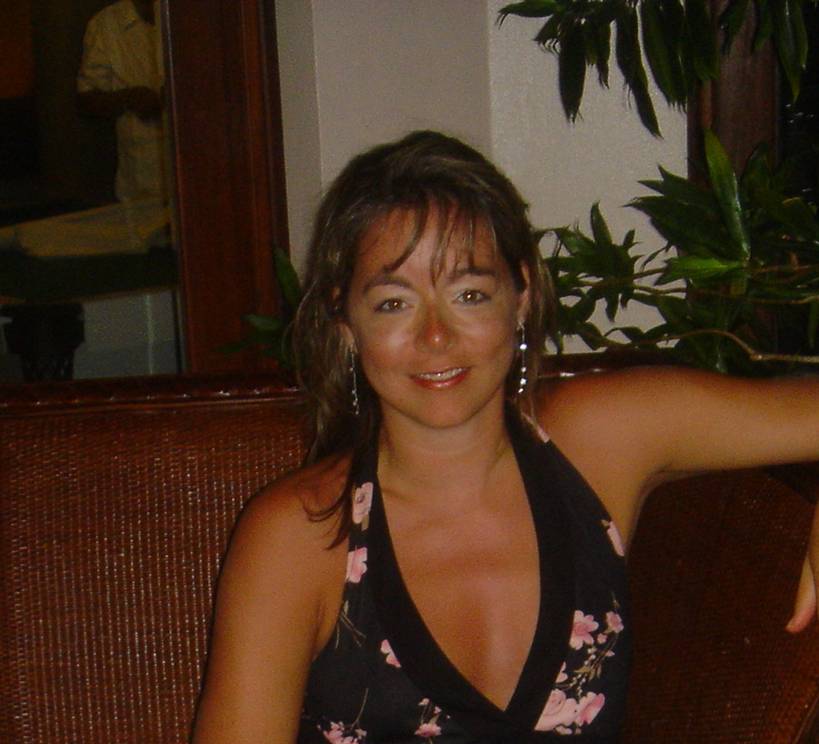
Diagnosed with juvenile diabetes at the age of twelve, Jacques Falk decided to dedicate her life to creating a culture celebrating healthy choices in her community. She uses policy, education, business, and creativity in order to build sustainable solutions to promote that change. Once again, I am humbled and honored to share another inspiring story in this interview.
Kristi’s Bio:
Kristi Jacques Falk is the founder and executive director of The Wellness Council for South Carolina. Kristi is passionate about the positive effects “true wellness” has on the lives of children and adults in South Carolina.
Diagnosed with Juvenile Diabetes at the age of twelve, Kristi has searched for a healthy path for her life. In 2000, she owned and operated Abundant Life Whole Foods Market in Conway, SC where her knowledge of healthy lifestyles expanded and was put to good use. After a couple of years, she realized that she needed to reach a larger audience and organized the Alternative Healthcare Expo which later became The Wellness Expo of Myrtle Beach. In 2006, Kristi founded The Wellness Council for South Carolina with a goal of educating and improving the lives of citizens throughout the state.
She has appeared on local television and radio programs and featured in publications such as Coastal Business Life, South Carolina Woman Magazine, Natural Awakenings Magazine, The Sun News, and Weekly Surge. She is currently a member of South Carolina Association of Non-Profit Organizations, South Carolina Public Health Association, Smoke Free Horry and is Co-Chair of the Training and Education Committee of Eat Smart, Move More SC.