
Inevitably there will be times when you have setbacks or things don t go your way. Maybe you didn't get a job you thought you were sure to get. Maybe you lost a job unexpectedly, didn't win a contract, or lost a major client. Your car always seems to break down right after you've had some other unexpected expense. These kinds of situations immediately place us in crisis. They don t feel good, but sometimes they re what we need in order to grow. The beautiful thing about crises is that they force us to take a step back and reevaluate what s going on in our lives and rediscover what we truly want and need. When we get over that initial shock and feeling of disappointment, we might realize that maybe that job wasn't really the best for us anyway. Maybe, just maybe, that wasn't what you really wanted to spend your life doing. Maybe that friend was holding you back instead of pushing you forward. The way I deal with crises of these sorts is simple: If something doesn't go my way professionally, I try to create a situation that would be more rewarding than the situation originally planned. A while ago, I was offered a job that looked very promising. After I accepted the offer, they pushed the start date back three times, later informing me (via e-mail) that they wanted to bring me on in the near future but I should feel free to explore other options. I was extremely disappointed. I felt disrespected and angry, but decided to make the best of the situation and follow my dream of working internationally. I then flew to Santiago, Chile and had great professional and personal experiences I wouldn't have had otherwise. Later, reflecting back on the original opportunity, I realized that working for a company that avoids a start date three times and then can t pick up the phone to explain the situation is probably not where I need to spend my time. Use setbacks as an opportunity to put your goals in order and act on them. In the moment, it s difficult to look at a setback as temporary, but they are. They happen to everybody. It s how you respond to them that will determine how they affect you.
Thanks Melissa for letting me know about this site.
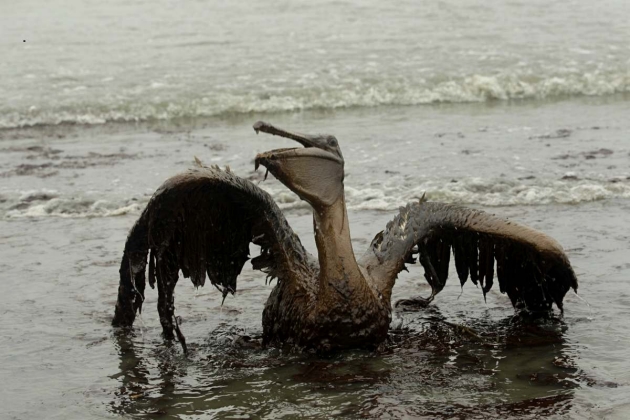
If you are wondering exactly how big this BP oil spill is, then check out http://www.ifitwasmyhome.com. This site allows you to use your current location, or zip code, and Google Maps to visualize how much space the oil spill covers over a particular geographic area. It’s been a big deal in the news, but seeing just how major it is on a map really hits home.

It truly saddens me to think I might be partly responsible for at least thirteen (13) people – people I never knew – deciding to bring their lives to a premature end. However, the reality is that just might be the case. Maybe I did have something to do with it. No, I take that back. I most certainly had something to do with it. At Foxconn, a Chinese electronics factory that produces components for the likes of Dell, HP, and Apple, there were thirteen reported cases of suicide since January. Why? Well, according to an article by the New York Times, the harsh work environment, a sense of loneliness, and working 286 hours per week in order to earn the equivalent of $1 per day were the major causes. Personally, I think the problems run much deeper than that, but it would take too much space to present my argument in a blog post (look for a full article soon).
How I am responsible for the despair these factory workers, their families, and others in similar situations feel? It’s easy to blame the huge global companies that outsource their production to factories like this, but the constant consumer demand for faster, stronger, better, and CHEAPER products drive these companies to cut corners wherever they can. Two big expenses that increase costs: manufacture and customer service. Sometimes I walk into a store like Target and walk by the $1 section, pick up an item and think:
That’s crazy. We were able to mine the raw materials, refine those materials, ship them to China, pay the salaries of everybody from the executive team to the designers to the factory workers, label it, package it, ship it BACK to the States, and pay the courier, the inventory people, and the salaries of everybody in the store…all for under $1 per unit – for a pen.
Just under $1 is the maximum we’re willing to spend on that pen – the same amount the Chinese factory worker may have made that day. Is it worth it?
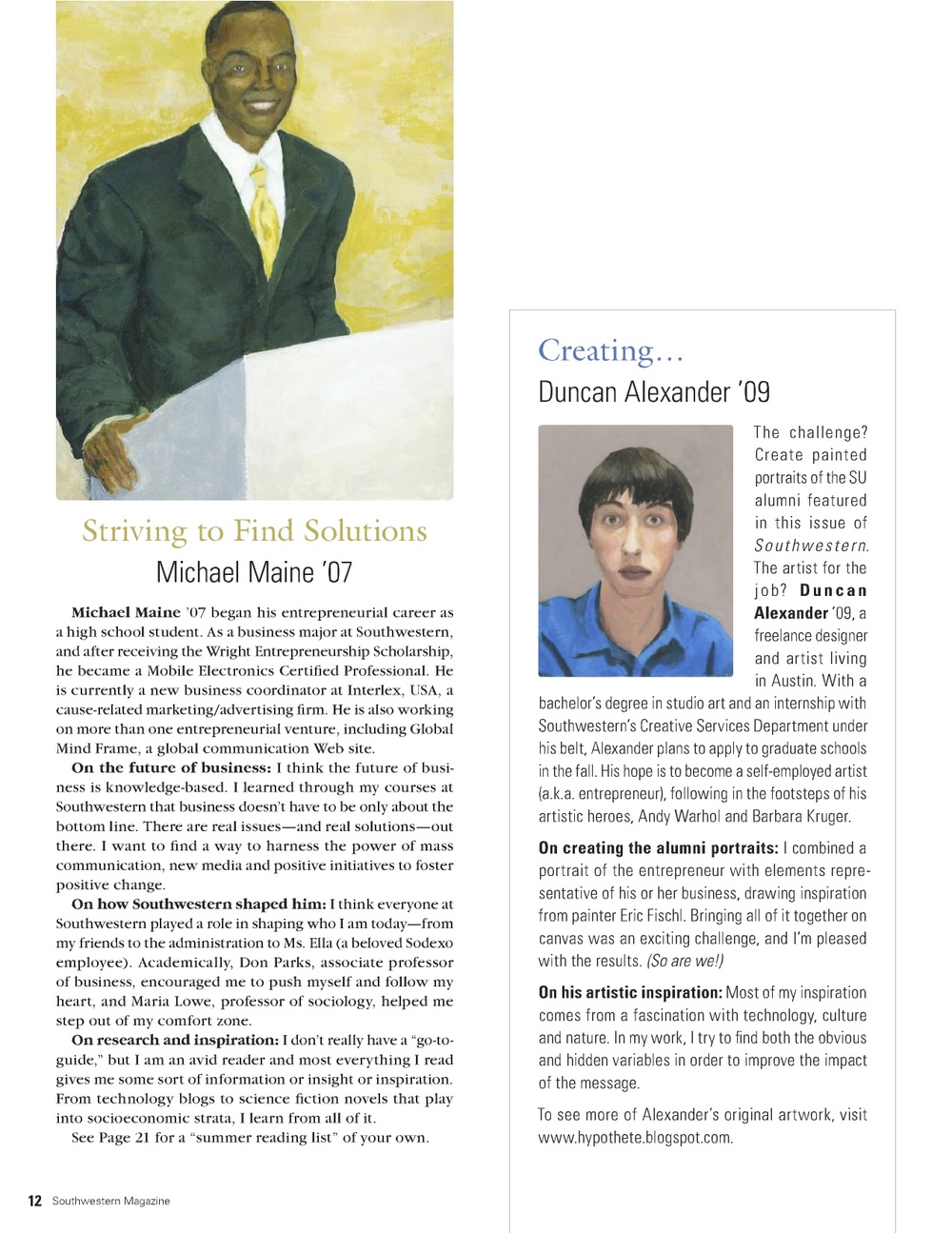
It’s not everyday I get an article written about me, so I thought I’d share this with you today. I didn’t even know it was written until I got a text message from my friend Dylan saying, “Hey man how’ve you been? Saw your picture in the new SU mag. Gmf still goin’ well?” (Thanks for letting me know man). The “GMF” that he is referring to is Global Mind Frame, a project that I’ve been working on for a few years to try to promote global collaboration and learning. Still working on it. If you know any developers who would be willing to work with me on this project, please feel free to let them know that I would love some help. To read the entire magazine, follow this link.
Credits:
- Artwork: Duncan Alexander
- Interview: Kristina Moore